
How to Check Criminal History in Lexington
Choose the source by asking what happened and where. A Town of Lexington incident belongs with the police records channel. A citation or municipal charge belongs with Municipal Court. A person taken to the county detention center appears through the county custody channel, while an indicted case is filed in General Sessions. SLED CATCH is the later state repository product. It is not a substitute for a fresh police report or a local court disposition.
- Identify the police agency, event date, location, and report or citation number before making a request.
- Ask Lexington Police for the incident or accident report through its records counter or the town FOIA route.
- Check Lexington Municipal Court for a city ordinance, traffic, or summary criminal case and request its disposition.
- Use the Lexington County jail and General Sessions channels if the arrest was booked at Gibson Road or the case moved beyond municipal court.
- Use SLED CATCH for a statewide, fingerprint-supported arrest-and-disposition record after checking the local source.
Lexington identifiers should follow the request from one office to the next. Keep the police report number, municipal citation, county booking data, and any General Sessions case number separate. Each Lexington number describes a different record, even when all four arose from the same event.
Lexington Police Report Versus County File
Lexington is both a town and the county seat. That overlap causes a frequent records mistake. The courthouse and county law-enforcement offices are nearby, but they do not take custody of every town document. Lexington Police creates and maintains its own incident and arrest reports. The county Clerk holds General Sessions filings. Municipal Court keeps the town's ordinance, traffic, and summary criminal files.
Match the request to the record maker. A police report number should go to Lexington Police. A citation should name the court. A General Sessions number points to the county Public Index and Clerk. The broad Lexington County criminal-history overview explains the county and state layers without changing who owns the town source. Asking the wrong counter can produce a true response that no record is held there, even though another Lexington office has it.
The Lexington Police Department
Lexington Police is at 111 Maiden Lane, Lexington, SC 29072. The main number is 803-359-6260, and the published records contact is Rosy Woerner at 803-951-4630. The counter lists weekday hours from 8 a.m. to 5 p.m. Incident reports are normally available in person after 48 hours for supervisory review. A person who lives outside the area or cannot visit for medical reasons may call for another arrangement.
The official Lexington police report instructions show where the town directs a report-copy request.
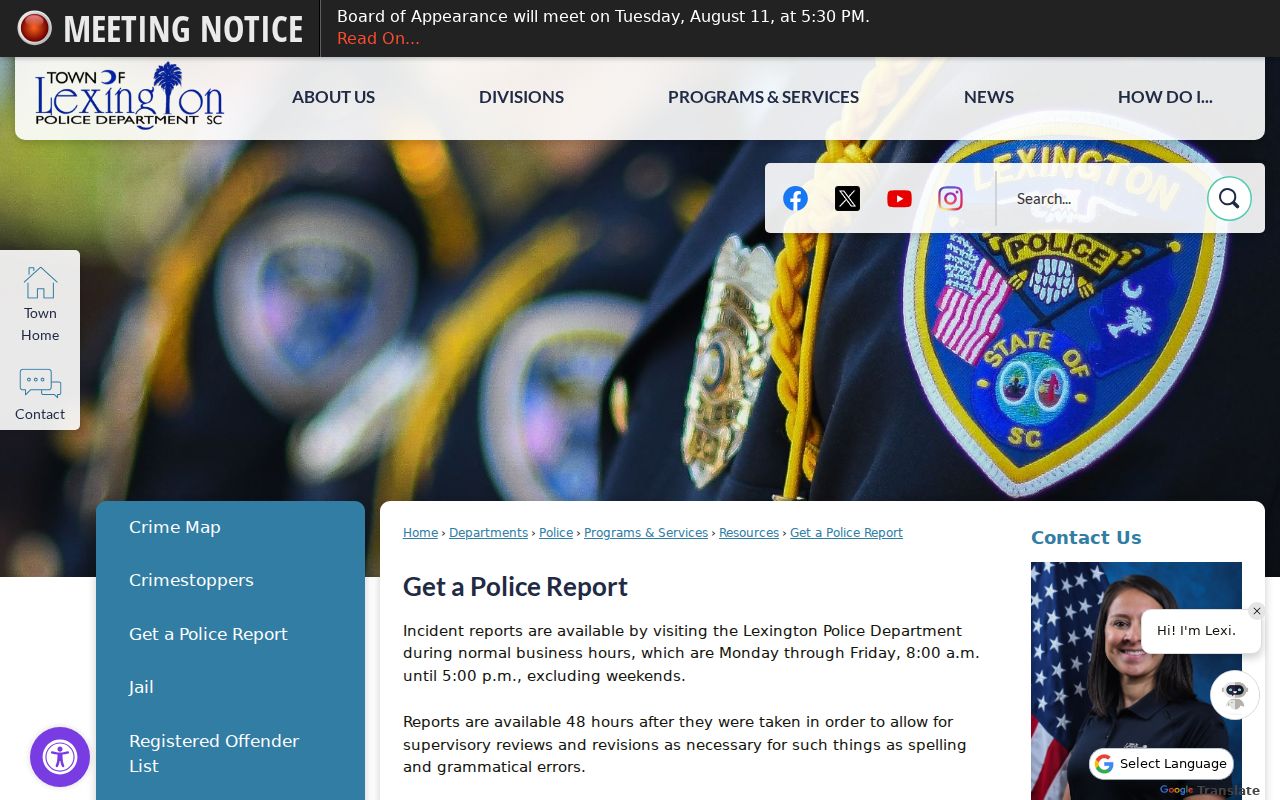
The town page helps separate a routine copy request from a broader FOIA request. Bring or provide the report number, date and time, precise location, involved person's name, and the specific part needed. Published town charges include $3 for an accident or incident report unless the requester is a victim, subject, or witness.
Lexington Police FOIA Record Access
The Town of Lexington launched a new FOIA Management System on June 10, 2025. The transition route includes foia@lexsc.gov and clerk contacts at 803-358-1571 and 803-996-3765. Use FOIA when the desired police material falls outside the normal report-copy process or requires review and redaction. Define the record instead of asking an open-ended question. Dates, locations, involved names, and a report number reduce staff search time.
The town's official FOIA request page documents the current Lexington record route.
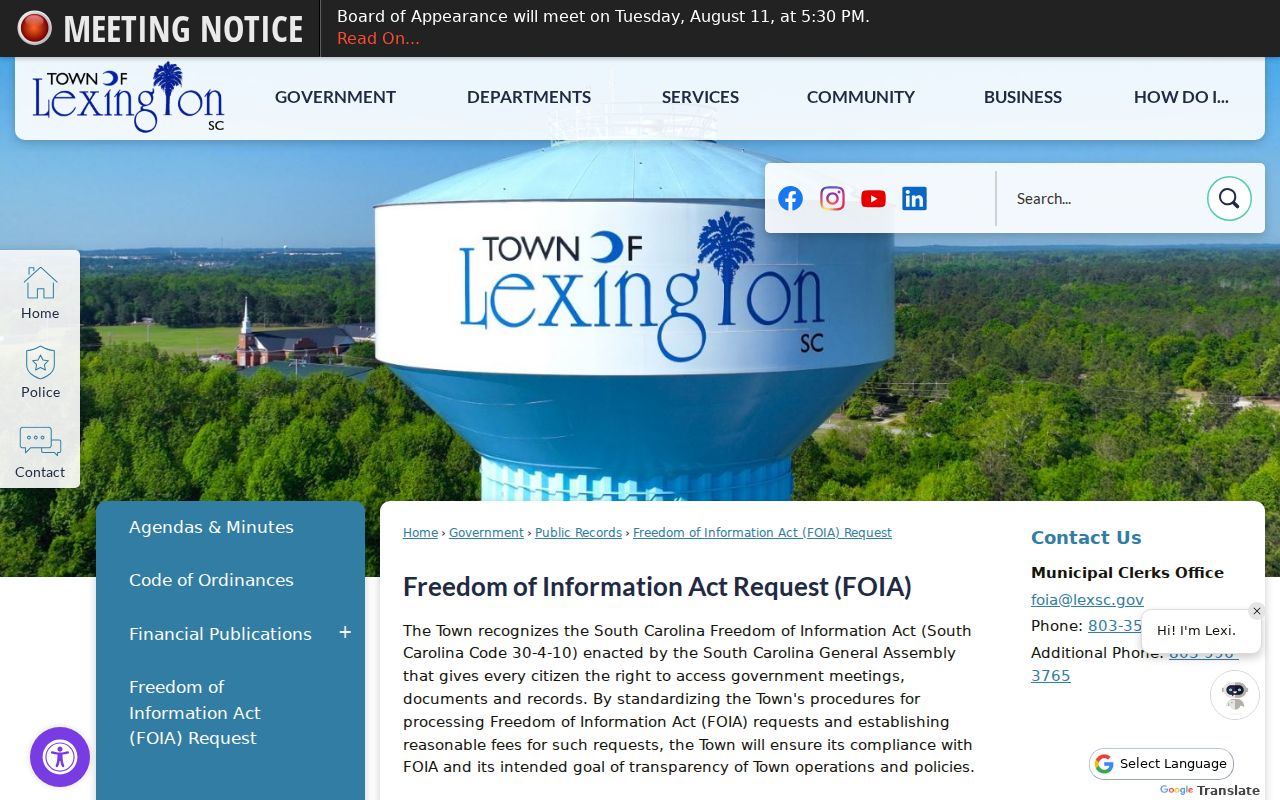
The municipal system applies to town-held records and does not replace the county clerk, jail, or SLED channels.
Town charges are $0.20 per page, $5 for a CD, and $10 for a DVD. Employee time is billed at the lowest qualified rate, with no charge below thirty minutes. A narrow request can therefore save both time and cost. Ask separately for items such as the incident report, supplement, CAD record, audio, or video because each may have a different review path.
| Town Record Item | Published Charge or Rule |
|---|---|
| Paper copy | $0.20 per page |
| CD | $5 |
| DVD | $10 |
| Accident or incident report | $3, unless requester is victim, subject, or witness |
| Employee time | Lowest qualified rate; no charge under thirty minutes |
Arrests and Bookings in Lexington
Lexington Police can make the arrest, but a custodial booking normally moves to Lexington County Detention Center at the Gibson Road complex. The jail creates the intake record, fingerprints, booking image, property entry, charges presented at admission, and custody data. That booking charge can later be amended, dismissed, or replaced. For current custody, use the county inmate channel or call 803-785-2743 with the person's full legal name and date of birth.
The Lexington County Detention Bureau page supplies the facility contacts and service details used after a town arrest.
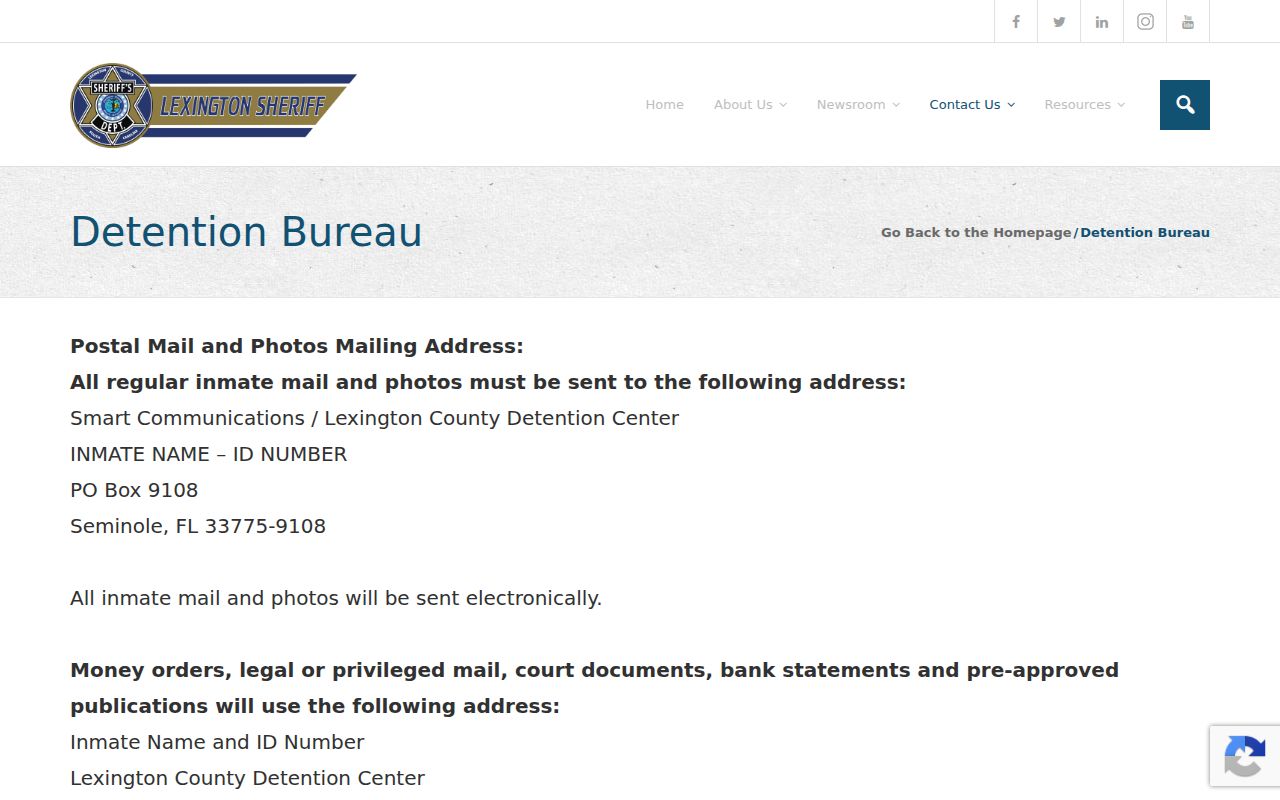
Use the jail for current custody and bond routing, not for a final verdict. Once prosecutors file charges, the court record becomes the best source for what happened to the case. A historical booking or underlying incident report may require a focused request to the creating agency.
Lexington Booking Records at Gibson Road
The official Lexington County P2C Inmate Inquiry is a free web catalog. It offers a general text search plus Advanced Search fields for last, first, and middle name, age, charge, arrest date, race, and sex. Results default to arrest-date order and load ten at a time, with a platform retrieval limit of 200. Lexington's current P2C setup enables the Inmates module. It does not expose a Recent Arrests, Wanted, or Daily Bulletin tab.
A visible profile can show the booking date, arresting agency, booking agency, holding facility, court date, charge, and bond details. Those fields document custody. They do not establish guilt. If a name is absent, call the jail, verify spelling and birth date, then check the court or arresting agency because release, timing, or a name variation may explain the gap.
Lexington Municipal Court Records
Lexington Municipal Court shares 111 Maiden Lane with the police department. Its main number is 803-951-4634, and published counter hours are weekdays from 8 a.m. to 5 p.m. Clerk Regina Lowell and Christina Brunnemer can be reached at 803-358-1565. The court hears town ordinance, traffic, and summary criminal matters, ordinarily within the municipal limit of a $500 fine or thirty days in jail.
A citation gives the court and appearance data. Provide the defendant name, citation or case number, and the disposition date when asking for a copy. The court can supply a person's own local background-check product with valid photo identification. A request about another person requires a current signed release. That local product does not replace SLED CATCH or a General Sessions search.
| Court Name | Lexington Municipal Court |
|---|---|
| Case Types Heard | Town ordinance, traffic, and summary criminal matters |
| Case Lookup Channel | Citation information and direct clerk inquiry; some matters may appear in Public Index |
| What the File Shows | Charge, citation or case number, hearings, plea, disposition, sentence, and payment entries as applicable |
| Copies | Ask the clerk for a plain or certified disposition and confirm the current charge |
Missing Lexington Municipal Court Record
Not every municipal matter appears in the South Carolina Public Index. Absence from the county search does not prove that no town case exists. Read the citation first. If it names Lexington Municipal Court, call that clerk with the citation number, name, and likely disposition date. Ask whether the case stayed municipal, was remanded, or moved to General Sessions.
Do not use another city's portal as a shortcut. The West Columbia municipal search form, for example, is built for West Columbia citations and cases.
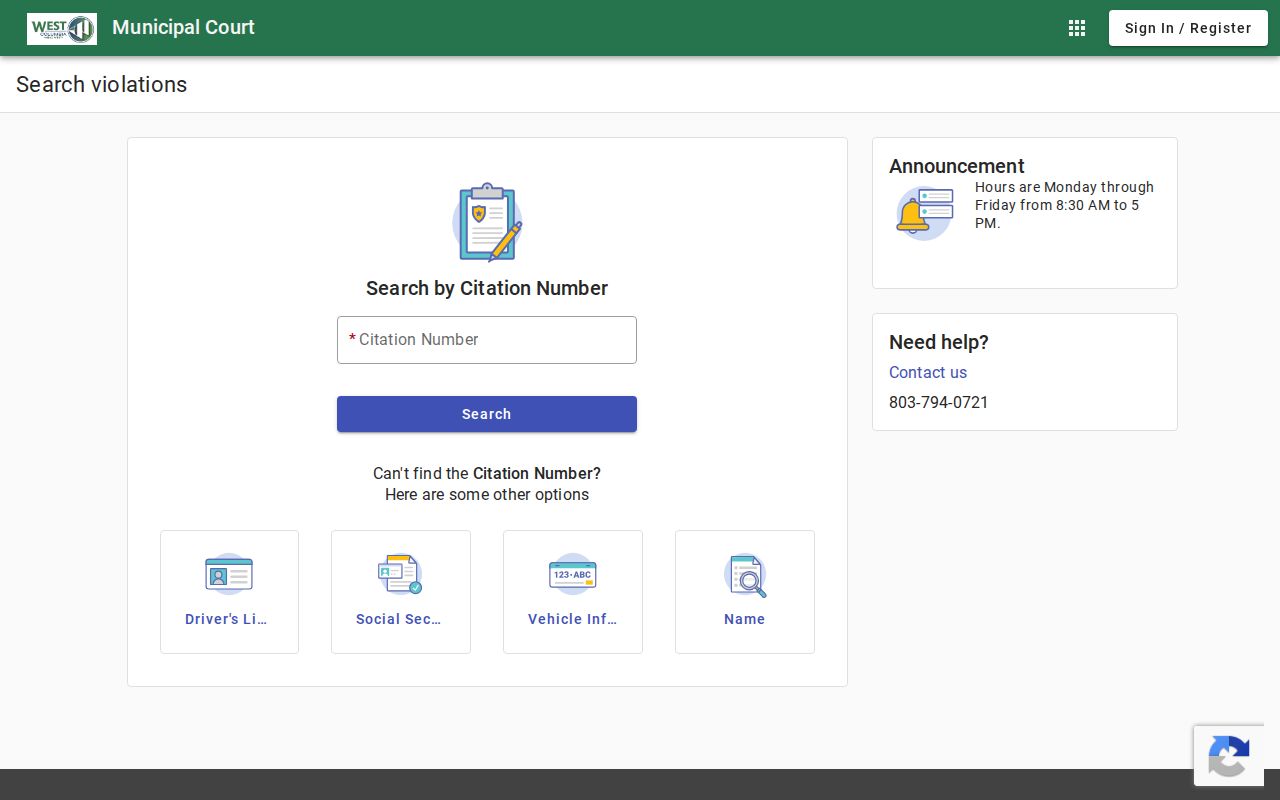
The image illustrates why the city on a citation matters. Similar-looking municipal portals are not countywide databases. A Lexington ticket belongs with Lexington Municipal Court unless the record itself shows a transfer.
Note: A missing Public Index result calls for a clerk inquiry, not the assumption that the Lexington municipal matter was erased.
Where Lexington Records End Up
Different parts of one event travel on separate tracks. Lexington Police keeps the incident and arrest report. The county detention center holds the booking and present custody record. Municipal Court maintains a city case that remains within its jurisdiction. An indicted or transferred prosecution enters Lexington County General Sessions, and the final court disposition may later flow to SLED's Computerized Criminal History repository when it can be matched to submitted fingerprints.
Record flow: Lexington Police Department › Lexington Municipal Court or Lexington County Courts › South Carolina Law Enforcement Division
The route is not instant. A very recent arrest may appear at the jail before any docket is filed. A court disposition may take time to reach SLED. Compare sources when reviewing your own record, and send a correction request to the office that created the wrong fact. The town corrects its report, the clerk corrects its docket, and SLED reviews its repository entry.
Lexington Criminal Case Number 32
General Sessions case numbers follow the form YYYYGS32#####. The digits 32 are Lexington County's code. They provide a quick check on a copied case number and help keep a county prosecution distinct from a town citation. Summary-court numbers use a different pattern, so the lack of “GS32” does not by itself make a municipal or magistrate number invalid.
Use the Lexington County Public Index for a General Sessions filing. Search by the full case number when known because it avoids same-name matches. Pop-ups may need to be enabled for detail. Read the event timeline through disposition and sentence, rather than stopping at the first charge. Since January 1, 2026, home addresses no longer appear in new or existing public-index cases.
Lexington Registry Records Stay Separate
A location-based record question can also be routed to the wrong system. Sex-offender registration is not part of a town police report, Municipal Court lookup, or SLED CATCH result. Lexington County uses the official SORT system maintained by SLED and county sheriffs. The Lexington-specific registry gateway opens with its own terms.
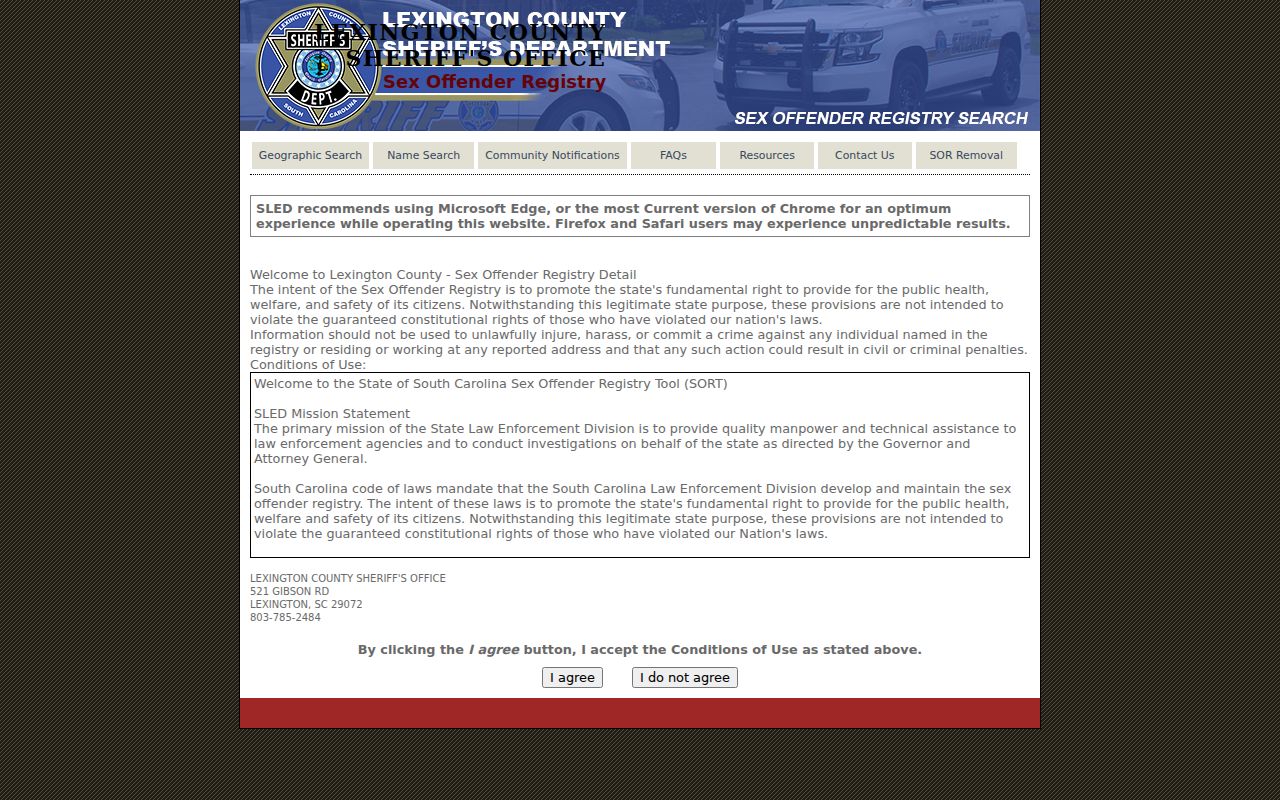
Use that route for a Lexington location or registrant search, then direct compliance concerns to the sheriff. The separate Lexington County sex offender check covers profile fields, notifications, tiers, and lawful use in depth. A registry result should never be read as a new police allegation.
Public Access Rules
South Carolina FOIA governs access to many town police records, but it does not make every detail public. Active-investigation material, juvenile information, victim identity, medical facts, security material, and information protected by another law may be withheld or redacted. Ask for the nonexempt part when only part of a record is restricted. Court sealing and expungement orders also override ordinary access.
The Town of Lexington and its Police Department are distinct from the county Public Information Office. Send a city request through the town route. Court files go to the maintaining clerk. SLED CATCH requests go to SLED. That custodian-first approach is faster and keeps any dispute tied to the office that can fix the source.
Key Statutes:
South Carolina Freedom of Information Act, S.C. Code §§30-4-10 through 30-4-165 sets the public-record policy, response process, reasonable-fee rules, and exemptions.
S.C. Code §30-4-40 permits withholding in defined cases, including when release would harm an investigation, privacy, safety, or a fair trial.
S.C. Code §§23-3-115 and 23-3-120 govern criminal-history dissemination and covered fingerprint submissions to the state repository.